Devon Rex
Features


Origins
The Devon Rex was born by accident in 1960 in Devonshire, England, when a woman named Beryl Cox discovered among a litter of stray cats a peculiar kitten with curly fur and enormous ears. This kitten, which she named Kirlee, was the result of a natural mutation affecting the structure of the coat. Initially thinking it was the same mutation that had given rise to the Cornish Rex, crosses between Kirlee and that breed produced straight-haired offspring, proving that they were two completely different mutations.
From that discovery, an independent breeding program for the Devon Rex was started, using crosses with other short-haired breeds to expand the genetic base while preserving the curly coat mutation. The breed was recognized by the GCCF of the United Kingdom in 1967. Unlike many breeds, the Devon Rex has a relatively narrow genetic base, which has favored some specific health predispositions.
Today the Devon Rex is a niche breed but with very loyal followers worldwide. Its unique appearance, extroverted character and low shedding level make it particularly attractive to people looking for a different and interactive cat. It is also popular among people with mild cat allergies, although it is not a truly hypoallergenic breed.
Characteristics and aptitudes
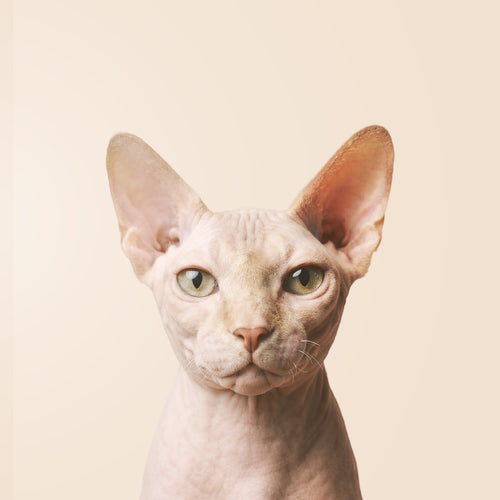
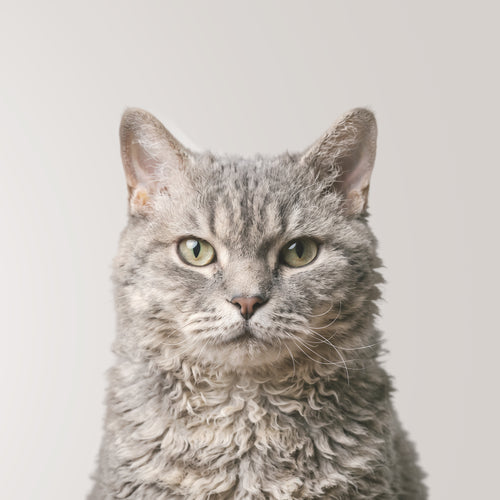
The Devon Rex is a medium-sized cat with a slender but muscular body, long thin legs and an elongated neck. Its head is triangular in a wedge shape, with full cheeks and prominent cheekbones. The ears are its most striking feature: huge, wide at the base and with rounded tips, placed on the sides of the head. The eyes are large, oval and slightly oblique. Overall, the Devon Rex has an appearance that is reminiscent of a goblin or fantasy character.
Its coat is its other unmistakable characteristic: extremely soft to the touch, short and formed by small curls or waves distributed throughout the body. This curly effect is due to the absence or scarcity of guard hair (the outermost, thickest layer), which also means that the Devon Rex has minimal shedding compared to other breeds.
As for temperament, the Devon Rex is one of the most sociable, active and affectionate cats in existence. It loves to climb, jump and explore every corner of its home. It is a cat that literally clings to its family: it likes to be on the lap, on the shoulders or beside its owners in bed. Its intelligence is notable and it can learn to fetch objects, to respond to its name and to perform small tricks.
Care
The coat care of the Devon Rex is minimal thanks to its short coat and minimal shedding. However, its curls are delicate and excessive brushing can damage them. The most recommended approach is to pass a damp cloth or the fingers gently over the coat once a week to remove excess sebaceous grease. The large ears of the Devon Rex also require frequent cleaning, as they tend to accumulate more wax than other breeds.
The Devon Rex needs a lot of physical and mental stimulation to be well. Interactive toys, climbing trees, scratching posts and active play sessions with its owners are essential elements for its well-being. It is ideal for homes where there is movement and activity, as the Devon Rex will always want to be in the middle of everything.
Thanks to its poor thermal insulation, the Devon Rex is more sensitive to cold than other breeds and can actively seek out heat sources. The diet should be of high quality and relatively abundant to compensate for its fast metabolism, but with portion control to avoid obesity in less active animals.
Most common diseases
The spinal muscular atrophy of the Devon Rex, also known as hereditary muscular spasm, is a breed-specific neurological condition that affects the muscles of the neck and trunk, causing weakness and difficulty maintaining the head upright. Although it has no cure, it is not necessarily fatal and many affected cats can live with good quality of life with appropriate care. A genetic test exists to identify carriers.
Patellar luxation is another frequent condition in the Devon Rex, especially in individuals with more extreme conformation. This condition causes the kneecap to displace from its normal position, causing pain and lameness. In more severe cases it may require surgical intervention. Hypertrophic cardiomyopathy can also affect the breed, so periodic cardiac check-ups are recommended.
Give your Devon Rex the best nutrition with OnlyFresh, with high-quality proteins that support its active metabolism and its muscular health, so it maintains its energy, its curiosity and its inexhaustible joy throughout its life.